Sébastien Maleville
Bangkok  

The long way round

Five cities, and 14,264 km of moving house from Paris to Bangkok, one relocation at a time, as the crow flies. It looks tidy as a line. Real life had more boxes.

1982–2000France

Roots
Contour lines with two knots, like a hiking map of the forest or the grain of a plank.
Fig. 1 Contour lines, like a hiking map of the forest

I grew up in Milly-la-Forêt, a small town at the edge of the Fontainebleau forest, and spent most of my childhood outdoors: in that forest, on the beaches of the Basque Country, collecting shells in Brittany, skiing in the Alps.

Holidays meant my grandparents’ house near Le Mans, an old farm my grandfather spent a lifetime improving. He had turned the former stables into a workshop, and we built things there in metal and wood. A go-kart with no engine, so it only went downhill. A mechanical slot machine that only worked because my brother sat behind it, pushing the drawer back and forth.
2000–2007France

Paris

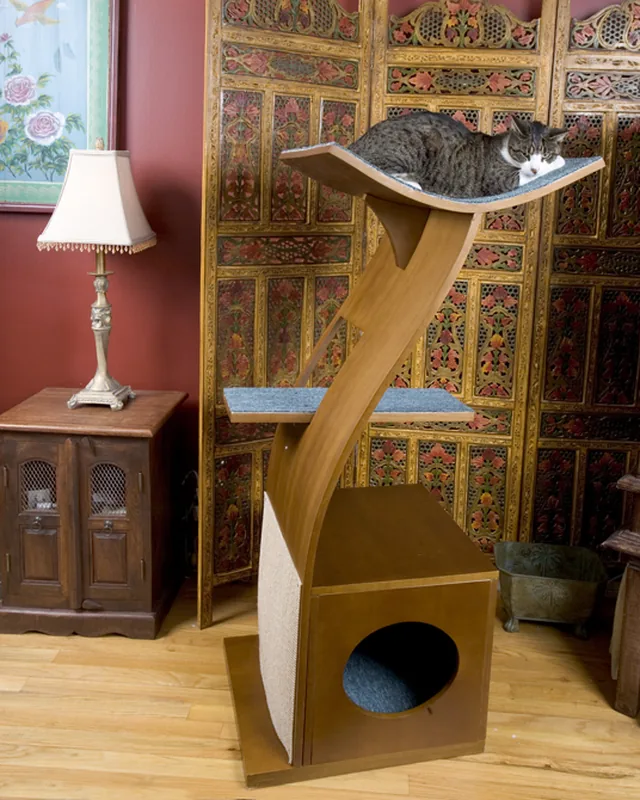
The Little Lotus cat tree at home: a curved wooden column rising from a box base, with a tabby cat asleep on its top platform.
Fig. 2 Lotus, a plywood cat tree from the freelance years, in use

I didn't start in design. At school I studied economics, then sales and communication. In 2000 I switched to a foundation year at Strate, then Créapole, and graduated in 2004.

At Créapole, around 2003, my product design professor, Mr Noury, told us: “Think about China!” It stuck with me, and he was right.

Then three years of freelancing for clients in China, Singapore and the US: lamps for TAOlight, including Smooth and Themis, a plywood cat tree called Lotus, kitchen scales. Small objects, real factories, very honest feedback. By 2007 I’d had enough of theory. What matters in design is doing and making, and design without manufacturing is nothing. So I took Mr Noury’s advice and moved to China, where things are made.

8,217 km

2007–2011China

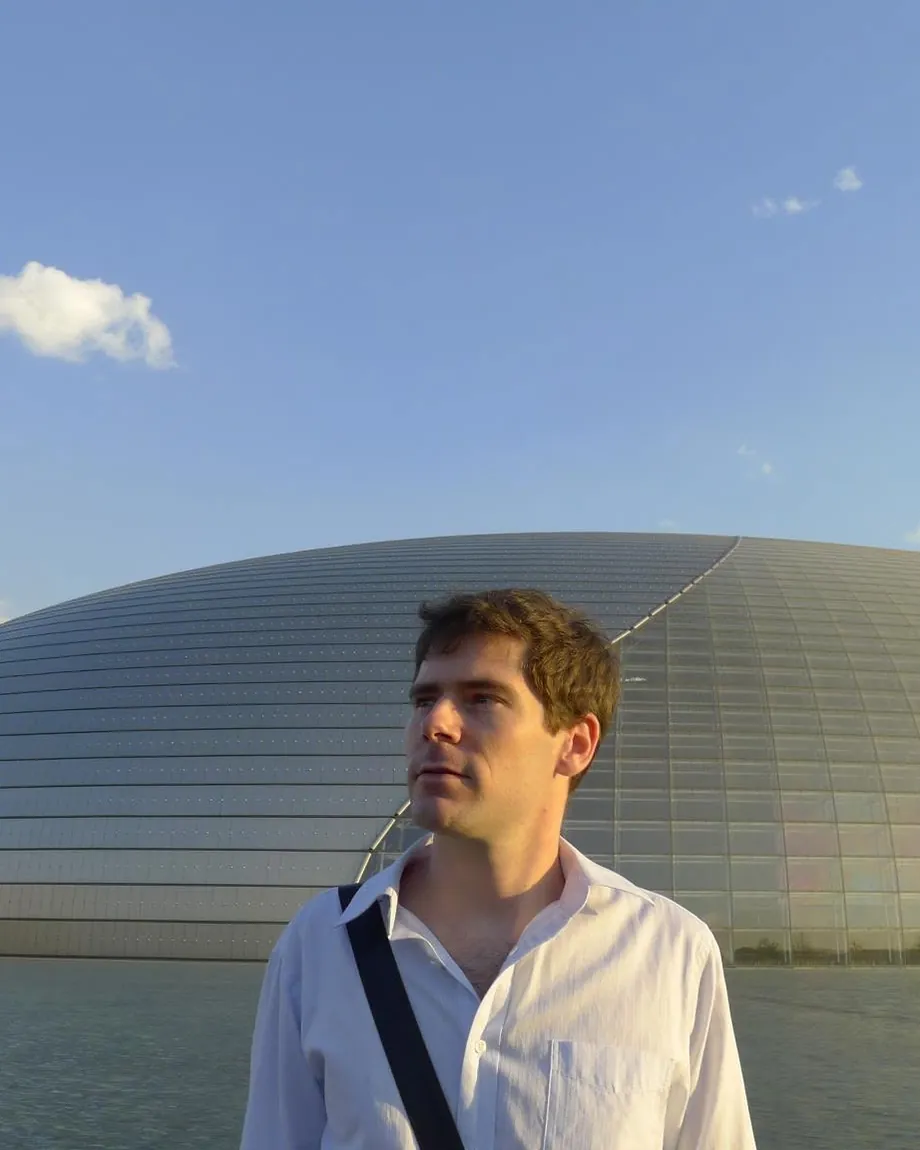
Beijing 北京

Sébastien in a white shirt in front of the National Centre for the Performing Arts in Beijing, 2011.
Fig. 3 National Centre for the Performing Arts, Beijing, 2011

Lenovo's Innovation Design Center took me on as an industrial designer, and young as I was, they gave me a whole product line: the IdeaPad netbooks, just before the iPad arrived. I became design lead on five IdeaPad laptops, from the S10 to the U160, flew to the factories around Shanghai to approve samples part by part, tuned in-mould films on site in Tokyo and Kyoto, and filed two patents, co-developed with in-house engineers.

Beijing also gave me the smog. The heavy days before the 2008 Olympics were my turning point towards sustainability.

1,943 km

2011–2014China

Shenzhen 深圳

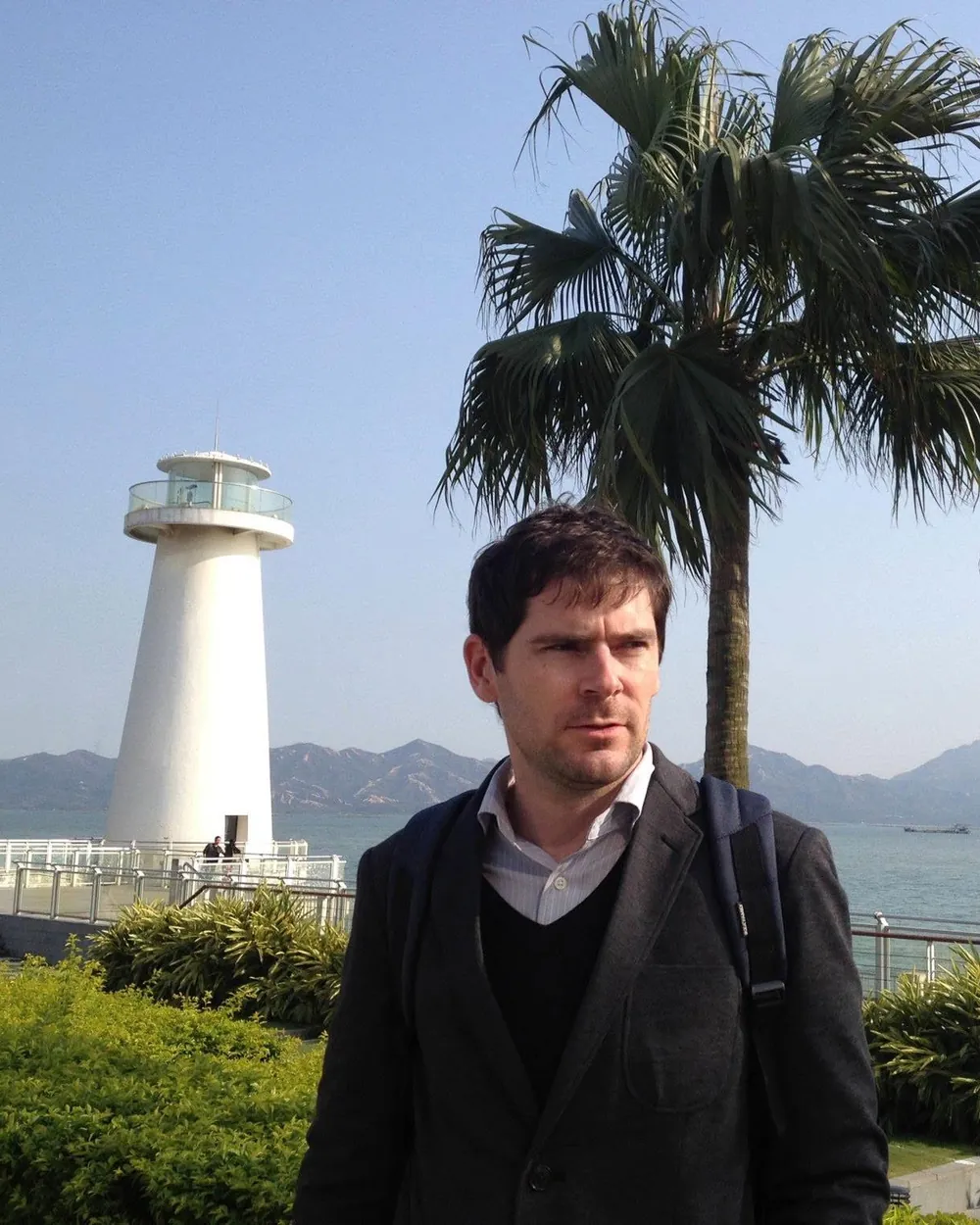
Sébastien on the Shenzhen seafront, by a white lighthouse and a palm tree, 2013.
Fig. 4 Shenzhen seafront, 2013

I’d had enough of working in a silo on small things, so I joined a creative task force at TCL Multimedia. Our job was the bigger picture: connecting strategy and brand values with design and with concepts that look further ahead, so the work builds lasting value for the brand.

I still took TVs, media boxes and remote controls from first sketch to mass production, in the city that builds a good part of the world's electronics. Two of them won iF Design Awards in 2013: the RC350 remote, and the V101, an LED TV only 11.5 mm thick.

It's also where I started mentoring junior designers and running design research workshops.

Late 2012A visit

Denmark Danmark

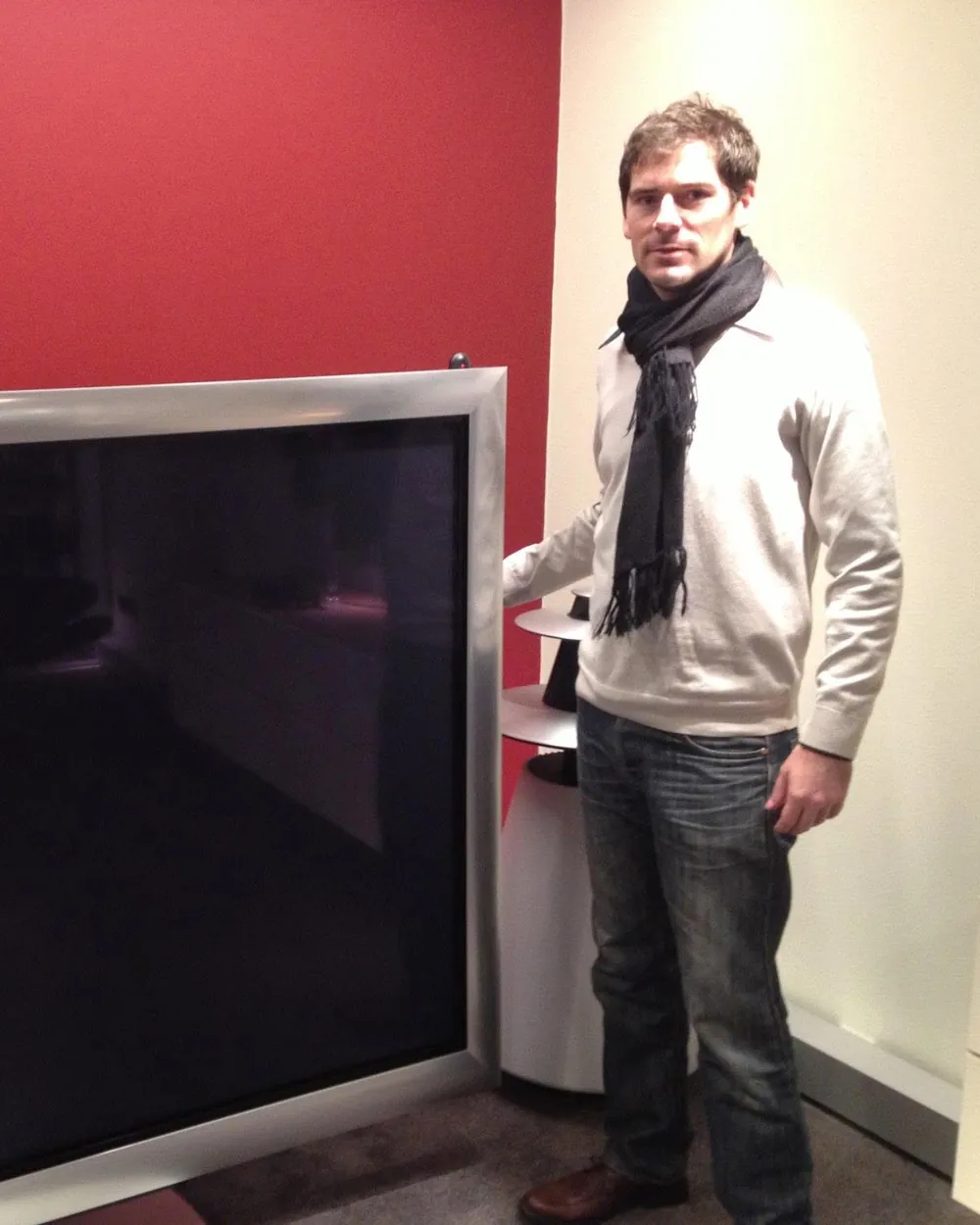
Sébastien in Denmark in 2012, standing next to a large Bang & Olufsen television.
Fig. 5 Bang & Olufsen, Denmark, 2012

At the end of 2012 I travelled through Denmark, with a stop at Bang & Olufsen. Something clicked. The calm, minimal, long-lasting way the Danes design was the way I already worked. I’d been bringing those ideas to China, and they weren’t always welcome, to the point where I started doubting myself.

Denmark settled it. This is how I wanted to work in design.

1,213 km

2014–2016China

Shanghai 上海

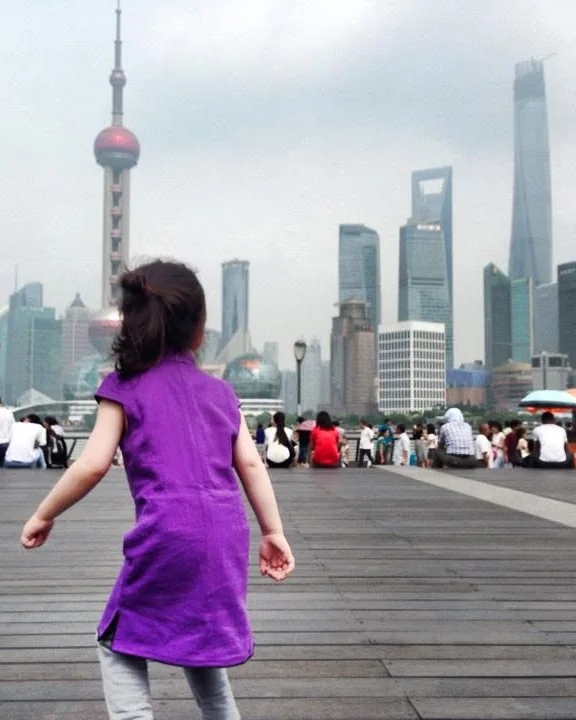
A little girl in a purple dress, seen from behind, running along the Bund boardwalk towards the Pudong skyline and the Oriental Pearl Tower.
Fig. 6 Our daughter on the Bund. Shanghai was her home until she was five.

I wanted to work for a Danish design house. When I heard Jacob Jensen Design, the studio behind decades of Bang & Olufsen classics, was opening in Bangkok, I sat down and wrote what was basically a love letter to Scandinavian design. A meeting with Timothy Jacob Jensen in a hotel turned into ten years with the house, and a few surreal lamb dinners. I’m still grateful to him for that chance.

It started in 2014 with building the Shanghai design team: consumer electronics, outdoor furniture, smart jewellery, loudspeakers. Lots of foam models, glue and cutting mats.

2,891 km

2016–2024Thailand

Bangkok กรุงเทพฯ

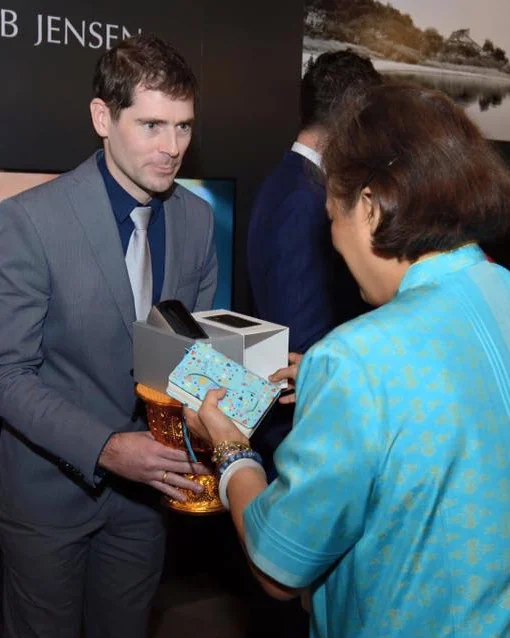
Sébastien, in a grey suit, presenting a product in its box to Her Royal Highness Princess Maha Chakri Sirindhorn at the Jacob Jensen Design studio.
Fig. 7 With Her Royal Highness Princess Maha Chakri Sirindhorn at the opening of KMUTT’s Knowledge Exchange, February 2016

In February 2016 I presented our work to Her Royal Highness Princess Maha Chakri Sirindhorn at the opening of KMUTT's Knowledge Exchange building, the future home of our Bangkok studio. In May I moved here to set it up, and led it for eight years.

We designed for Thai and Southeast Asian brands, from kitchen taps to banking, and collected a Red Dot, a German Design Award and a Japanese G Mark along the way. I stayed for the weather, the food and the kind people. For everyday life, I haven't found better.

2024–Bangkok

Now

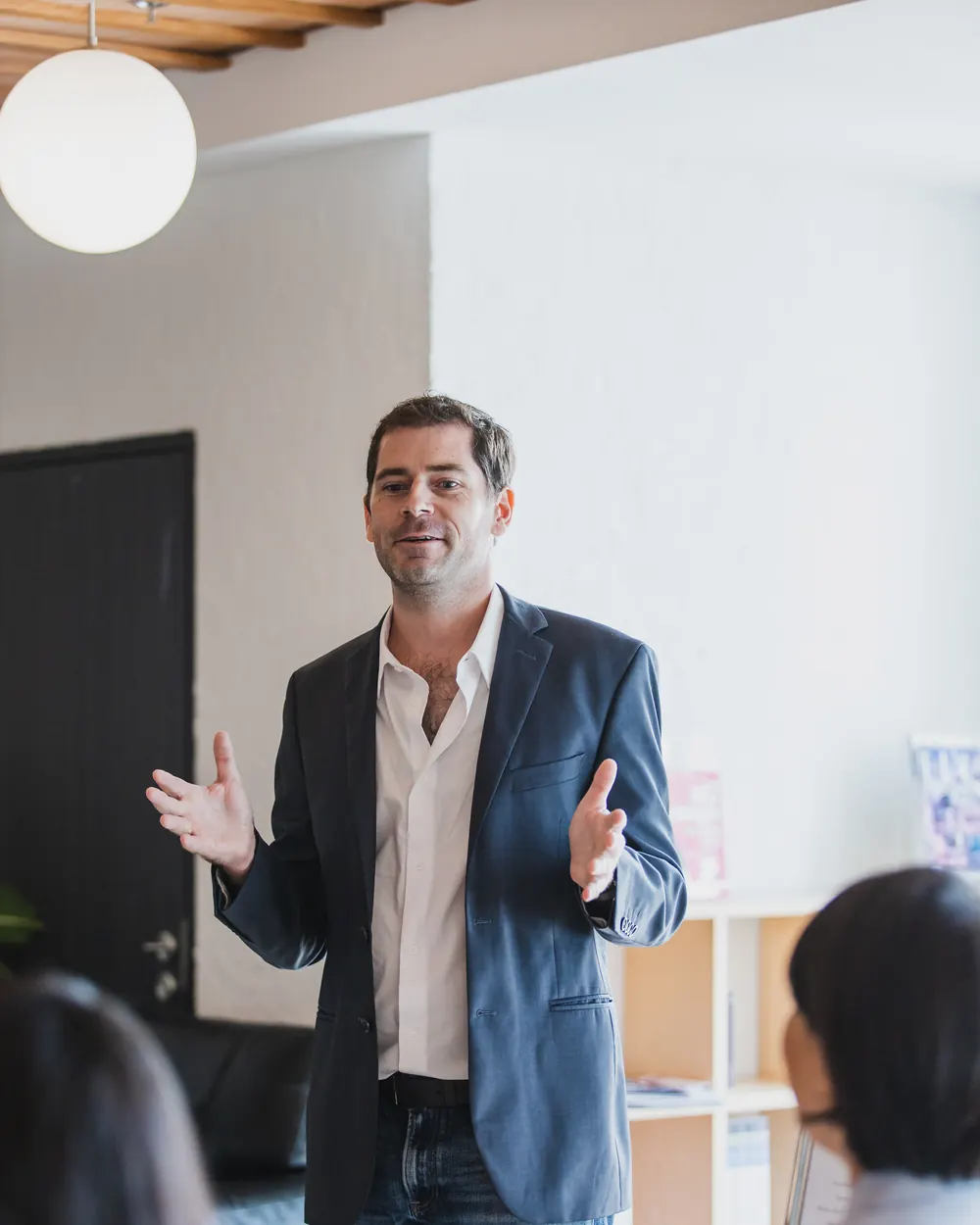
Sébastien speaking to guests at a roundtable in the Jacob Jensen Design studio in Bangkok.
Fig. 8 Round the table with guests in Bangkok, back in the Jacob Jensen Design years

In May 2024 Patthiya Budsayarattana and I co-founded Essential Studio. Today almost anyone can deliver good design and good quality: that’s the baseline. What sets a product apart now is its environmental side, and liking the idea is not enough. It has to hold up as a business decision. It’s also where governments and regulations are heading, so the brands that prepare now will be ready when the rules arrive.

Essential is where everything above comes together: almost twenty years of factories across Asia, a love of making, an appetite for strategy and purpose, a Scandinavian sense of what to leave out, and nature, which goes on the brief before the first sketch. We help manufacturers in Southeast Asia and around the world become brands of their own.

I still coach students at KMUTT, sit on design juries, and I'm learning Japanese. Being a dad of two keeps the patience in practice.

Continual learning

I keep learning about the green economy and circularity. Four courses so far, each with a certificate from UNITAR.

  1. Massive open online course

    Science, Technology and Innovation for SDGs Roadmaps, Level I

    UNITAR with the UN Department of Economic and Social Affairs

  2. E-learning course

    Introduction to Sustainable Development in Practice

    UNITAR with UNDP–UNEP Poverty-Environment Action

  3. Course

    Waste Management and Circular Economy

    UNITAR with the Swedish Environmental Protection Agency

  4. Course · 2 hours

    How to Prevent E-waste?

    UNITAR, developed with the support of the Swedish Government

    • The state of play
    • Recycling
    • Reuse & repair
    • Reduce

Off the clock

The parts that don't fit on a CV, though they leak into the work anyway.

  • Outdoors

    A horizon to stare at and green all around. It feels like going back to the roots, to the earth every product comes from.

  • Making things

    Sketching and model making, by hand whenever I can. The habit never left.

  • Things that come back around

    I care where a product goes after we're done with it. Repair first, recycling second.

  • Space and science fiction

    Favourite author: Andy Weir. Favourite mission moment: two SpaceX boosters landing side by side, in sync.

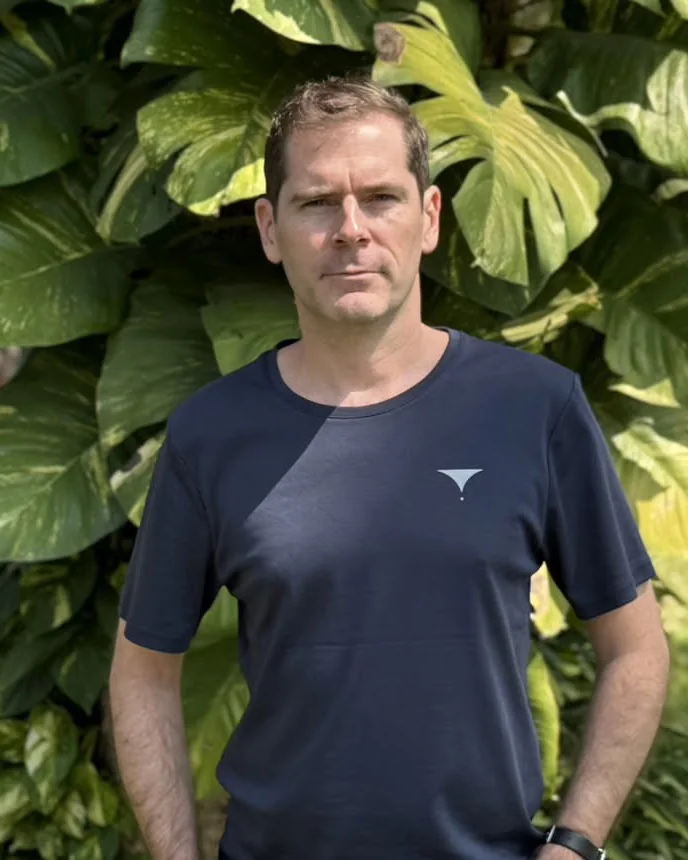
Sébastien in a navy Essential Studio T-shirt, standing in front of large monstera leaves in a sunny garden.
Fig. Under the monstera, 2026.

Languages, honestly rated

  • FrançaisNative

    Mother tongue. Still the language I count in.

  • EnglishFull professional

    The one I work, write and joke in.

  • ไทยLimited working

    Daily life, taxis and site visits. The tones are still under negotiation.

  • 中文Limited working

    Enough to negotiate a factory sample and order dumplings with confidence.

  • EspañolElementary

    Enough to order tapas. Not enough to argue about them.